
 Volodymyr Lukaniuk
Quick answer: A standing-seam metal roof costs roughly 2–3× what an architectural asphalt roof costs installed — think $20,000 and up here versus $9,000–$18,000 for asphalt — but it can last 40–70 years against 25–30 for asphalt, sheds snow and ice better, and takes wind and hail better. Worth it if you're staying 20+ years or want the look. For most homeowners in our area, architectural asphalt is still the better value, which is why it's what we install most.
Every few years a homeowner asks us some version of the same question after seeing a neighbor's shiny new roof: is metal roofing actually worth it, or is it a status symbol for people with more money than reason? Fair question. We install both architectural asphalt and standing-seam metal roofing across the north and northwest Chicago suburbs, and we make the same margin either way — so here's the honest version, numbers included, not the sales pitch.
What "standing-seam metal roofing" actually means
Standing-seam metal roofing is long, vertical metal panels with raised, interlocking seams and no exposed screws — the fasteners hide under the seam instead of punching through the face of the panel. That's a different animal from the corrugated panel roofing you see on pole barns, and different again from stamped metal shingles made to look like asphalt or slate from the curb. Panels typically run 12–19 inches wide, steel is the standard choice in this climate (aluminum costs more and dents easier, copper is a premium look for the right buyer), and a baked-on Kynar/PVDF finish is what keeps the color from chalking out after twenty summers. The concealed-fastener design matters more than it sounds: exposed-fastener metal panels depend on rubber gaskets under every screw, and those gaskets dry out and start leaking well before the metal itself wears out. Standing seam skips that failure point entirely.
How long does a metal roof actually last in our freeze-thaw climate?
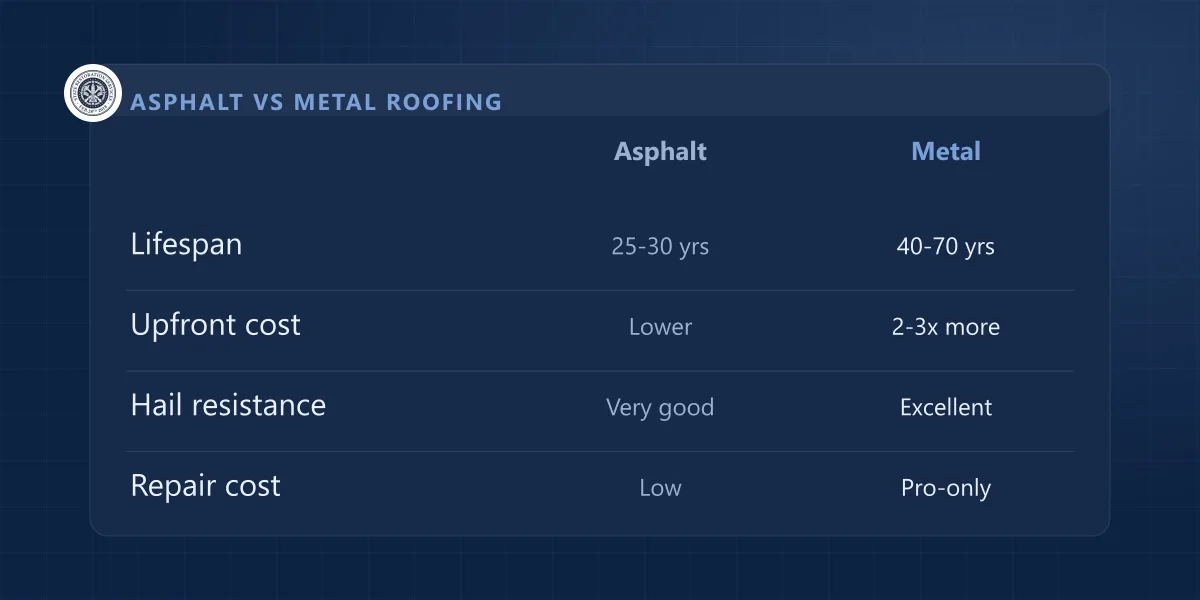
Figure 40–70 years for standing-seam metal against 25–30 years for architectural asphalt in this climate — that's the same range we quote homeowners comparing the two systems in person, not a marketing number. Metal doesn't have granules to shed or an asphalt mat that gets brittle from repeated freeze-thaw cycling, so it simply degrades slower here than shingles do.
That said, the number on the spec sheet only holds if the install is right. Panels expand and contract with temperature swings — a Chicago roof can move through well over 100°F of surface-temperature range between a January night and a July afternoon — so the clip system has to let the metal move without tearing loose fasteners or buckling the panel face. Get that wrong and you get "oil-canning," the wavy, rippled look you sometimes see on a cheap metal roof, which is a workmanship problem, not a material one. Metal also sheds snow fast, which is good for ice-dam risk (see our ice dam guide for why that matters) but means you need snow guards above any door, walkway or deck a sheet of snow could avalanche onto.
What does standing-seam metal actually cost, installed?
Expect $20,000 and climbing for standing-seam metal on an average single-family home in our area, against $9,000–$18,000 for architectural asphalt and $18,000–$28,000 for premium designer asphalt — the same installed-cost ranges we quote in our roof replacement cost breakdown. Metal costs more per square because the panel material itself is pricier, it takes a crew trained specifically on seaming equipment and flashing details, and a steeper or more complex roofline multiplies labor fast on a system that's largely custom-fabricated to the job.
Run the cost against the lifespan, though, and the gap narrows more than most people expect:
| System | Installed cost | Typical lifespan | Cost per year (approx.) |
|---|---|---|---|
| Architectural asphalt | $9,000–$18,000 | 25–30 yrs | ~$330–$650 |
| Premium designer asphalt | $18,000–$28,000 | 25–30 yrs | ~$650–$1,050 |
| Standing-seam metal | $20,000+ | 40–70 yrs | ~$285–$500 |
Metal can actually come out ahead per year of roof life — the catch is you're writing one much bigger check up front instead of two smaller ones spread across your time in the house, and that only pencils out if you're around long enough to see the second half of that lifespan.
The real advantages beyond "it lasts longer"
Wind and hail resistance is genuinely better on metal — the panels shrug off the wind speeds that lift asphalt tabs, and where hail is concerned metal usually dents before it fails, while a hard-enough hit on asphalt can crack the mat and open a leak path (see our hail damage guide for what that looks like). Steel roofing also carries a Class A fire rating, and because there's no granule layer to lose, you don't get the patchy algae streaking that shows up on shaded asphalt roofs after a decade. A lighter-colored metal finish reflects more summer heat than dark shingles too, which can take some load off attic temperatures — related to what we cover in our roof ventilation guide, though ventilation still matters on a metal roof exactly as much as it does on asphalt.
The honest downsides nobody leads with
Beyond the 2–3× upfront cost, the biggest one is repairability: fewer roofers work on metal, so a small puncture or a flashing leak on a metal roof often means calling a specialist instead of the same crew that patches asphalt same-day. Thinner-gauge panels can dent from large hail even when they don't leak, which is a cosmetic issue insurance may or may not cover (more on that below). And yes, the "loud in the rain" complaint is mostly a myth on a properly built system — solid decking and underlayment under the panels, not open purlins like a pole barn, bring the sound close to asphalt. If a metal roof sounds like a drum in a rainstorm, that's a build detail that was skipped, not a fact about the material.
Does insurance treat a metal roof differently after a storm?
Often, yes — many Illinois carriers write a cosmetic-damage exclusion specifically for metal roofs, meaning hail dents that don't affect function may not be a covered loss even though the same hail would be a payable claim on asphalt. Read your declarations page or ask your agent before you assume a dented panel means a check is coming. If a storm does cause a covered loss, the process is the same as any roof claim: we document the damage and build a code-compliant estimate, but Illinois law doesn't let a roofing contractor negotiate your insurance claim for you — that's what our affiliated licensed public adjuster, State Adjusting Services, is for.
Is metal roofing worth it for your home?
If you're planning to stay 20+ years, want the lowest-maintenance option on the market, or the vertical-panel look fits your home's style, metal earns its price. If you're likely to sell within a decade or the budget is the deciding factor, an impact-rated architectural asphalt roof gives you nearly all the storm performance at a fraction of the cost, which is exactly why it's still what we install most. Either way, we'll walk both options during a free inspection so you're comparing real numbers for your roof, not a national average. If the upfront number on metal is the only thing holding you back, ask about financing before you rule it out.
Frequently asked questions
Is metal roofing worth the extra cost in Illinois?
If you're staying in the home 20+ years, often yes — the cost-per-year of roof life can beat asphalt once you divide the higher price by the longer lifespan. If you're moving sooner or budget is tight, an impact-rated architectural asphalt roof is usually the better value here.
Does a metal roof make more noise when it rains?
Not when it's built correctly. A standing-seam roof installed over solid decking and underlayment, the way any legitimate roof in our area should be, sounds close to asphalt in a rainstorm. The "loud metal roof" reputation comes from open-purlin barn-style construction, not a house roof done right.
Will hail dent a metal roof?
Large hail can dent thinner-gauge panels without causing a leak. That's a cosmetic issue, and some Illinois policies specifically exclude cosmetic metal-roof damage from coverage, so it's worth checking your policy's wording before you assume a dent is a claim.
Can you install metal roofing over an existing asphalt roof, or do you need a full tear-off?
We tear off down to the decking rather than layer over old shingles. It costs a bit more up front, but it lets us inspect and repair the decking underneath and gives the new panels a flat, solid surface to seat against, which matters more on metal than on asphalt.
Thinking about metal vs. asphalt for your roof? Book a free inspection and we'll walk you through both options with real numbers for your home, or call (866) 992-2982 — we serve the north and northwest Chicago suburbs.