
 Volodymyr Lukaniuk
Should you replace your gutters with a new roof? Only if they fail a check. If your gutters run in one piece from corner to corner, drain to every downspout, hang tight on solid fascia and are big enough for the roof above them, we keep them: either left in place while we work or taken down and hung back up. If they are sectional and leaking at the joints, sagging, undersized, or fastened to rotten wood, a roof replacement is the cheapest moment you will ever have to swap them, because the crew, the ladders, the dumpster and the roof edge are already open.
We make that call on every north suburban roof we price. The sections below show what each choice adds to the bill, using the ranges we publish, and what to get written into the contract either way.
Three things can happen to your gutters on roof day
Every roof bid should say which of these it includes. If yours is silent, ask, because the difference shows up on the invoice or on the side of your house.
| What happens | When it fits | What it adds | What can go wrong |
|---|---|---|---|
| Left in place | Gutters are sound, hung low enough that the new drip edge can slide in above the back edge, and the fascia is dry. | Little or nothing. The crew protects them during tear-off and clears out the shingle grit at the end. | Old nails and granules fall into the trough. A ladder leaned on the front lip can kink it. |
| Taken down and hung back | Gutters are in good shape, but the back edge sits too high for the new drip edge or the fascia needs a look. | Labour only, usually billed per foot. Ask to see it as its own line. | Old hangers go into old holes. A run that was rehung without new screws or a fresh slope check can sag or hold water later. |
| Replaced | Sectional joints leak, runs sag, the size is too small for the roof area, or the wood behind them is soft. | New gutters and downspouts plus removal of the old ones. See the worked example below. | Very little, if the new gutter goes up after the drip edge and the slope is set from scratch. |
Six checks you can do from the driveway before we ever show up
Most of what decides it is visible from the ground or from an upstairs window. Walk the house once on a dry day and once while it rains.
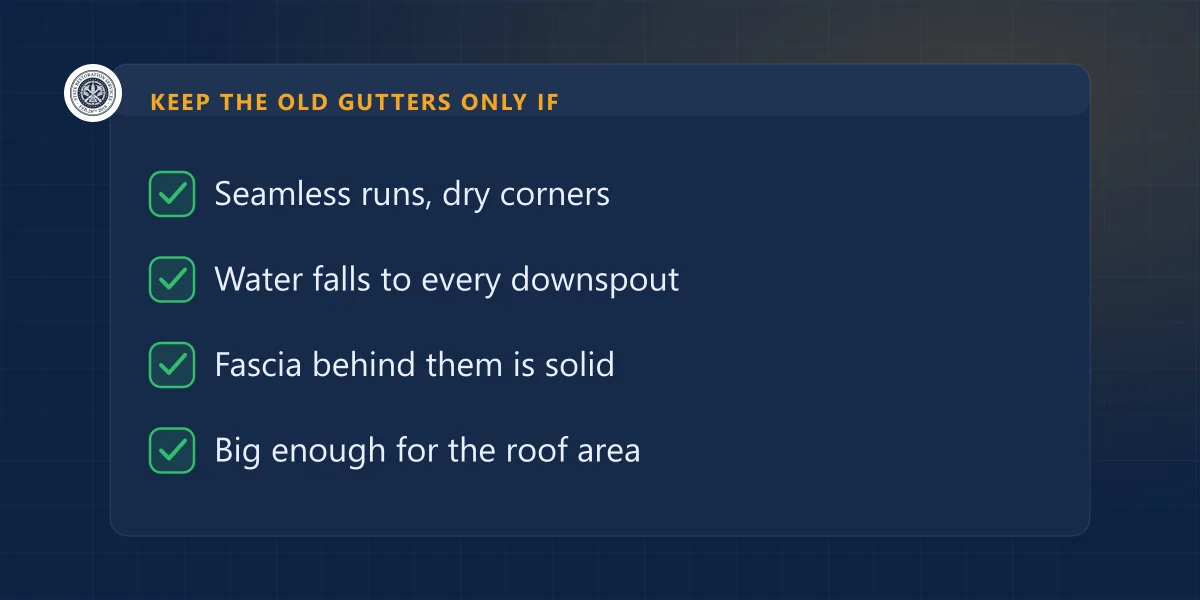
- Count the joints. Gutters formed on site in one piece have joints only at corners and at the downspout outlets. A seam every ten feet means sectional gutters, and those seams are where the drips and the rust start.
- Watch it rain. Water that pours over the front lip in a normal shower, not a cloudburst, points to a clog, a bad slope or a gutter too small for the roof. Our piece on why gutters overflow in heavy rain shows how to read where the water comes over.
- Sight down each run from a corner. A straight line with a slight fall toward the downspout is right. A belly in the middle, or a run that tilts away from the outlet, will hold water and ice.
- Look at the top of the fascia board behind the gutter. Peeling paint, dark streaks or wood you can see through gaps tell you water has been getting behind the gutter for a while.
- Check the hangers. If the gutter has pulled away from the house or rocks when you tap it with a broom handle, the screws have lost their grip. Our article on gutters sagging or pulling away explains what is actually holding them up.
- Measure the top. Five-inch K-style handles most suburban houses. Big or steep roofs and heavy tree cover do better with six-inch gutters and 3x4 downspouts. If you already have overflow and the roof is large, the size is part of the problem.
If every one of those checks comes out clean, keeping the gutters is a reasonable choice and we will tell you so. Two or more failures usually means you would be paying to rehang something you will replace in a few years anyway.
Why the drip edge decides more than the age of the gutter
The real reason gutters come down on a reroof is the strip of metal at the roof edge. On a new roof the drip edge goes on first, the ice-and-water membrane laps over it at the eaves, and the bottom row of shingles runs out over the metal so the water drops into the gutter instead of running down the fascia. For that to work, the back of the gutter has to sit under the lower lip of the drip edge.
On a lot of older houses there was no drip edge at all, or the gutter was hung tight against the old shingles. When the new metal goes on, the gutter is in the way. The crew can sometimes slip a drip edge or a gutter apron in behind a low-hung gutter, but if the gutter sits too high the only clean fix is to take it down, set the metal and the membrane, and hang the gutter back at the right height. Our guide to how far shingles should extend past the drip edge covers the measurements, and the one on gutter flashing explains the apron piece.
That is also why we would rather decide about the gutters before tear-off than halfway through it. A plan made on the ground costs nothing. A plan changed with half the roof open costs a day.
The fascia behind the gutter
Gutters are screwed through their back into the fascia board, the trim board at the end of the rafters. When we pull a gutter, we see that wood for the first time in years. Soft or rotted fascia cannot hold new hanger screws, so it gets replaced or repaired before any gutter goes back up, old or new.
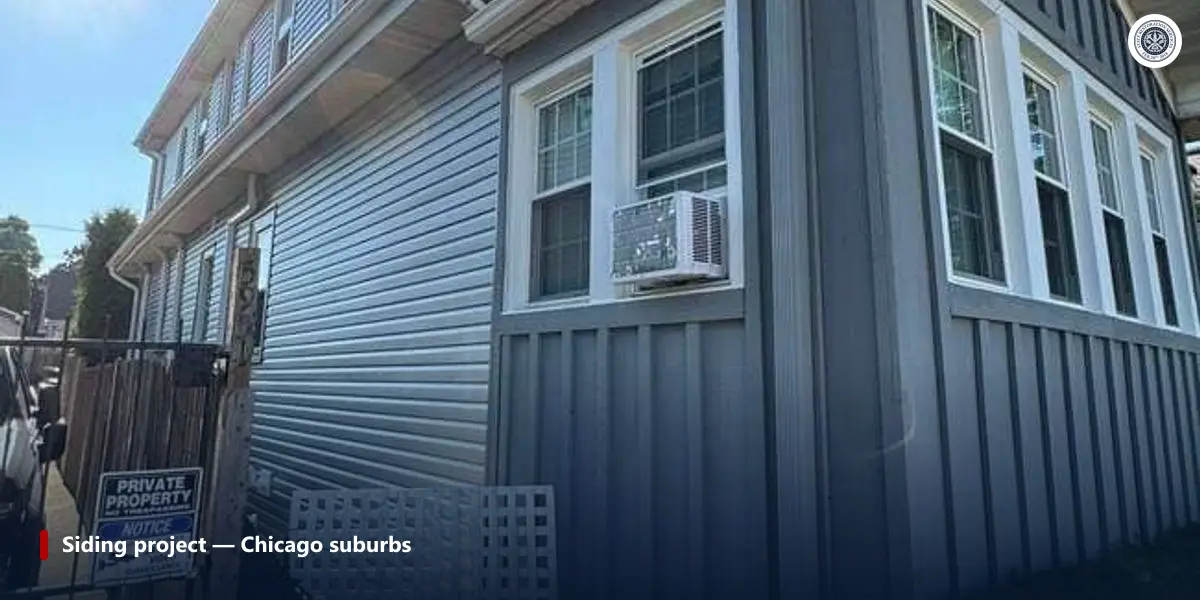
If your check found peeling paint or dark streaks behind the gutter, plan on some fascia work in the price, whichever way you go with the gutters. Our article on soffit and fascia covers what fails and why.
What doing both at once costs: a worked example
Take a typical house with 150 feet of gutter and four downspouts about 20 feet long. Using the ranges in our gutter cost per foot guide:
Ranges for planning, not a quote. We measure your roof before we price anything.
- New aluminum gutter formed on site, 150 ft at $6 to $14 per foot: $900 to $2,100
- Downspouts, 4 x 20 ft = 80 ft at a similar rate: $480 to $1,120
- Removal and disposal of the old gutters, 150 ft at $1 to $2 per foot: $150 to $300
- Planning range before any fascia repair: $1,530 to $3,520
Done as a separate job a few years after the roof, the gutter work costs about the same, plus a second crew visit, and the new gutter has to be fitted under a drip edge that is already nailed down. Doing it during the roof job, the removal line is often work the crew was going to do anyway to set the drip edge. Aluminum gutters formed in one piece last 20 to 30 years or more, so a new set put up with a new roof has a real chance of lasting about as long as the shingles above it. If money is tight, there is also roof and exterior financing.
One more case. If hail dented the gutters and the roof is being replaced on an insurance claim, the gutters belong in the same claim instead of on a separate bill. Our post on hail damage to gutters and downspouts explains what gets paid. Illinois law does not let a roofer negotiate a claim. We document the damage and write the estimate, and our partner, the licensed Illinois public adjuster State Adjusting Services, can represent you with the insurer. More on that is on our storm and insurance page.
What to get written into the roof contract about your gutters
Whatever you decide, put it on paper. These are the lines we would want to see if it were our house:
- Which of the three paths the price includes: left in place, taken down and rehung, or replaced.
- If they stay or are rehung: who pays if one is bent during the job, and that the troughs are cleaned of roofing debris at the end.
- If they are rehung: new screws or hangers, and the slope rechecked toward each downspout.
- If they are replaced: size, material, colour, number of downspouts, and that they go up after the drip edge.
- How rotted fascia found at tear-off will be priced, per foot or per board, before anyone opens the roof.
We install roofs and one-piece aluminum gutters with our own crews, so on our jobs the gutters are measured, formed and hung right after the roof edge is finished. If you are pricing a new roof, ask us to look at the gutters on the same visit.
Frequently asked questions
Do gutters have to come off for a roof replacement?
Not always. If they hang low enough for the new drip edge to fit above their back edge and they are in good shape, they can stay on while the roof is replaced. If they sit too high, are failing, or the fascia behind them needs work, they come down.
Can old gutters be put back up after the roof is done?
Yes, if they survived removal in one piece and the fascia is solid. They should go back with new screws or hangers and a fresh slope check, not into the old holes.
Should the gutters or the roof go first?
The roof edge goes first. The drip edge and the membrane at the eaves are installed, then the gutter is hung under the drip edge so the water lands inside it.
Are one-piece gutters worth it if I am already paying for a roof?
For most houses, yes. One-piece gutters have joints only at the corners and outlets, so there are far fewer places to leak or clog than on sectional gutters with a seam every ten feet.
Related reading: what is actually included in a full roof replacement and 5-inch vs 6-inch gutters.
Planning a new roof and not sure about the gutters? Book a free inspection or call (866) 992-2982, and we will check both on the same visit. We work across the north and northwest Chicago suburbs.