
 Volodymyr Lukaniuk

How much snow can a roof hold? More than most single storms leave on it. A typical roof is good for about 20 pounds per square foot of snow, and that is roughly four feet of fresh powder or two feet of old, packed snow. So the depth alone tells you little: you have to know how heavy the snow is. Weigh it first, rake for weight only when the numbers say so, and use the roof rake on the first few feet above the gutter when the worry is ice dams rather than weight.
We replace and repair roofs across the north and northwest Chicago suburbs, and after every big storm the same two questions come in: is this too much snow, and will the rake ruin the shingles? You can answer both from the ground, with numbers from the building codes of our own villages and from the federal snow guide.
Weigh the snow on your own roof in three steps
Snow weight comes down to how much water is in it. One inch of water spread over a square foot weighs about 5.2 pounds, so once you know the water, you know the load.
- Measure the depth in an open spot. Push a yardstick straight down to the ground in a part of the yard with no drift and no tree cover. On most sloped roofs that is a fair starting figure for the roof itself. The spots where the roof holds more are in the section further down.
- Then find the water in it: push a straight-sided can, open end down, through the full depth of snow, slide a piece of cardboard under it and carry it inside. Let it melt, then stand a ruler in the water. If the can is not as tall as the snow is deep, take two samples, one on top of the other, and add the water.
- Multiply the inches of water by 5.2, which gives pounds per square foot on the roof. No can handy? Use the conversions in the table below.
A worked example: the same 18 inches of snow, measured twice.
Fresh, fluffy: 18 in = 1.5 to 1.8 in of water = about 7.5 to 9 psf
Old, settled: 18 in = 3.6 to 6 in of water = about 18 to 30 psf
The depth is the same, and the weight can be four times higher. The second number is the one that matters after a week of thawing, rain and new snow on top.
If you would rather not melt a can of snow, these are the conversions the Maine Emergency Management Agency publishes from Insurance Institute for Business and Home Safety (IBHS) guidance:
| What is on the roof | Depth that holds 1 inch of water | Weight of each foot of it |
|---|---|---|
| Fresh snow | 10 to 12 inches | About 5 to 6 psf |
| Old, packed snow | 3 to 5 inches | About 12 to 20 psf |
| Ice | About 1 inch | About 5 psf per inch, so 60 psf per foot |
The ice row is the one people underestimate. An inch of ice along the eave weighs as much as a foot of fresh snow, and an ice dam plus a heavy, wet layer above it is where a roof edge takes the most load.

What a roof in the north suburbs is built to carry
Each village in Illinois adopts its own building code, and it writes its own snow figure into the table of local design conditions. Two of them, side by side:
The ground snow load is not the same as what your roof was designed for. It is the snow expected on open ground, and the person who designs the framing starts from it and adjusts for the roof's slope, its exposure to wind and how much heat comes through from below. A house built recently under that code was framed with this number in hand. A house from the 1960s was built to the code of its day, and a roof that has had a second layer of shingles, a sagging section or a cut rafter for a skylight can carry less than it once did.
So the practical reading is simple. If your arithmetic comes out well under 20 psf, weight is not your problem, even if the snow looks deep. If it is around 20 or more, check the drift spots below and watch the house for the warning signs further down. The same Northbrook table also answers yes on ice shield underlayment, the ice-and-water membrane along the eaves that goes under the shingles on our roof replacements in Northbrook and the villages around it.
Where the snow on your roof is deeper than in your yard
A flat yard measurement misses the places where wind and gravity pile snow up. The FEMA Snow Load Safety Guide (P-957) names them, and on houses here they look like this:
- A lower roof next to a taller wall
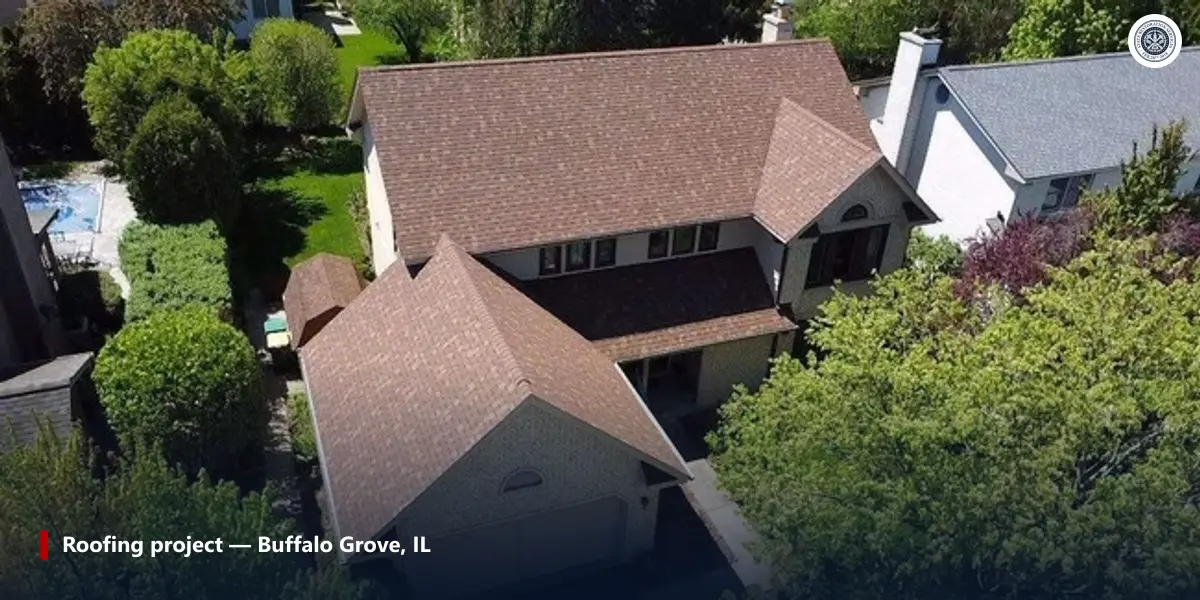
- The garage roof against a two-story wall, a one-story addition, a sunroom. FEMA says drifts often form on a lower roof in the wind shadow of the higher part of the building, so the snow there is deeper than anywhere else on the house.
- A porch roof or canopy under a gable
- Snow slides off the steeper roof above and lands on the porch roof below. FEMA names porch and sunroom roofs and entrance canopies under gables as the common case, and adds that the drop itself hits the framing with extra force.
- Behind a chimney, dormer or skylight
- Anything that sticks up catches blowing snow on one side. The drift right behind it is deeper than the rest of the slope.
- Low-slope sections
- FEMA notes that snow tends to slide off at roughly a 6:12 to 7:12 pitch and that low-slope roofs hold on to it. A shallow porch or a shed dormer like the ones in our article on low-slope roof sections keeps every inch that falls on it.
Two more details from the same guide. A well-insulated attic keeps more snow on the roof than a leaky one, because no heat comes through to melt it from below. And code snow loads allow for light rain on snow, not for a heavy rain soaking into a deep pack, which is exactly the March weather that turns a safe roof into a heavy one overnight.
How to rake snow off a roof without hurting the shingles
An asphalt shingle in January is stiff, and its granules are the layer that keeps the sun off the asphalt. A rake used the wrong way scrapes the first and cracks the second. This is the order we would follow on our own houses:
- Use a rake with a plastic or other non-metallic blade, ideally on small rollers that hold it just off the surface. FEMA's guide says metal snow rakes can damage roofing material and should be avoided.
- Stand on the ground, well back from the eave, and start at the edge. Take small bites and work up the roof one reach at a time, so the snow you pull does not come down on you in one slab.
- Pull down the slope, the way the shingles overlap. Pushing up the roof drives the blade into the lower edges of the shingles, where it can catch and lift them.
- Stop with snow still on the shingles. FEMA advises leaving at least 2 inches; scraping to the surface is what takes granules off.
- Clear the drift spots first if you are raking for weight, then the rest, so one part of the roof does not stay loaded while you work elsewhere.
- If the worry is ice dams rather than weight, the first few feet above the gutter are enough. That keeps meltwater from refreezing at the edge for now, though the cause is warm air escaping into the attic, as our article on why ice dams form explains.
Find where the power line comes into the house before you start, and stay away from that corner. Most roof rake poles are aluminum, and the Maine agency's guide points out that aluminum conducts electricity. Do not climb a ladder in snow, and never use a heat gun or an open flame on roof ice.
Do not chip at ice on the shingles with a shovel or an ice pick either. The ice is bonded to the granules, and it comes off with them.
Signs the roof is carrying too much
A wood-framed roof usually shows strain before anything gives way. From FEMA's list of warning signs, these are the ones that apply to a house:
- Popping, cracking or creaking noises from above
- Ceilings that sag or crack
- Roof boards or rafters that visibly sag, seen from the attic
- Doors or windows that suddenly will not open or close
- Cracked or split wood framing
- New cracks in walls or masonry
- A severe roof leak during a snow event
"If any of the warning signs identified in the previous section are observed, the building should be promptly evacuated and a qualified design professional should be contacted to perform a detailed structural inspection."FEMA P-957, Snow Load Safety Guide, section 4.3
That means a structural engineer, and it comes before any roofing. Do not go up into the attic or onto the roof to look more closely while the load is still there.
After the thaw: what to look at on the roof
Once the snow is gone, a walk around the house from the ground shows most of what a hard winter did:
- Shingle tabs that are cracked, torn or lifted along the lower edge, usually where someone raked hardest.
- Bare, dark patches where the granules are gone, and a heavy pile of granules at the downspout outlets. Our article on shingle granules in the gutters explains which piles are normal.
- Gutters bent outward or hangers pulled loose where sliding snow and ice hung off the edge. A gutter that no longer holds its pitch is a job for new seamless gutters, not another season of sagging.
- Stains on ceilings near outside walls, which usually point to an ice dam rather than to weight.
If something looks off, we come out, go over the roof and the gutters and tell you plainly whether it is a repair, a roof replacement or nothing at all. When the damage came from a storm, we document it with photos and measurements, and our partner, the licensed Illinois public adjuster State Adjusting Services, can represent you on the insurance claim.
Frequently asked questions
Should I rake all the snow off my roof?
No. Leave at least 2 inches on the shingles, which is what the FEMA Snow Load Safety Guide advises, because scraping down to the surface is what damages the roofing. For weight you only need to bring the depth down; for ice dams you only need to clear the first few feet above the gutter.
Will a roof rake damage my shingles?
It can. A metal blade dragged on the shingles scrapes off granules, and in deep cold a blade that catches the bottom edge of a stiff shingle can crack or lift it. Use a non-metallic rake, ideally with rollers, pull it down the slope in the direction the shingles overlap, and stop a couple of inches above the surface.
How much snow is too much for a roof in the Chicago suburbs?
It depends on how heavy the snow is, not only how deep. The Insurance Institute for Business and Home Safety uses 20 pounds per square foot as a rule of thumb for a typical roof, and Northbrook and Glenview list a ground snow load of 30 in their building codes. Two feet of fresh powder can weigh 10 pounds per square foot, while 18 inches of old, packed snow can weigh 30.
Is it safe to shovel snow off the roof myself?
Not from the roof or a ladder. Ice builds up on ladder rungs and boot soles, and a snowy roof gives no footing. Work from the ground with a long rake, stay well back from where the snow lands, and keep any aluminum pole away from the power line coming into the house. If a roof needs more than that, it needs a professional with fall protection.
Related reading: roof valleys and which kind leaks and how long a roof lasts in our freeze-thaw climate.
Worried about what this winter will do to your roof? Book a free roof inspection or call (866) 992-2982. Our office is open Monday to Friday, 7:00 AM to 7:00 PM, and Saturday and Sunday, 9:00 AM to 5:00 PM, and we work across the north and northwest Chicago suburbs.