
Vinyl siding replacement, hung to move with Illinois winters
State Restoration Services replaces vinyl siding with its own crews across the north and northwest Chicago suburbs, from our office in Lincolnshire. That includes Palatine, Northbrook, Buffalo Grove and Long Grove.
A typical house takes three to five working days. Below are finished jobs, the nailing rules that keep vinyl flat, and what it costs here.

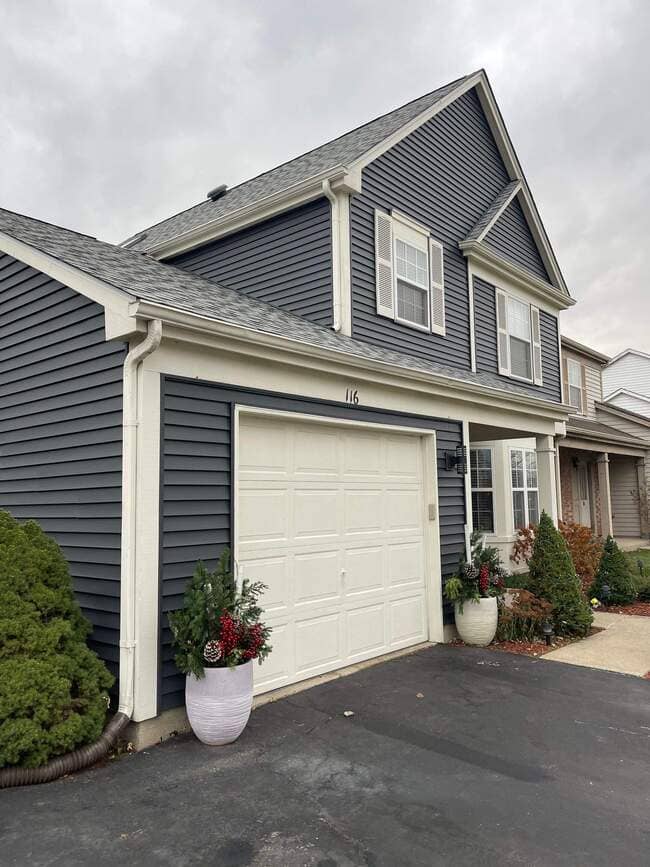
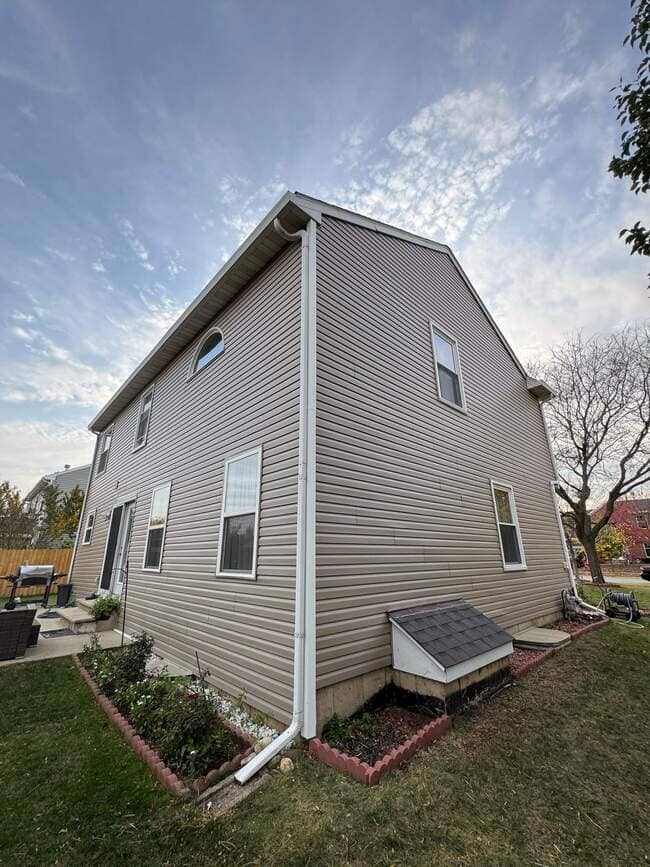
Vinyl lines and colors on houses we have finished
These come from our project gallery, where you can filter the siding jobs by line and color. Bring a name from this list to the inspection, or a photo of a house you like.

- Line
- Variform Vortex Extreme
- Color
- Bayou
- Town
- Glen Ellyn
- Line
- Ply Gem Mastic
- Color
- Deep Cavern

- Line
- CertainTeed Monogram
- Color
- Mountain Cedar
- Town
- Bolingbrook
- Line
- Cedar Creek
- Color
- Khaki
Can you match my old vinyl siding color?
Often only on a whole wall or a whole house. Colors get discontinued, and the panels on your house have faded since they went up. A new panel beside them can show, which is why the choice is usually made per wall.
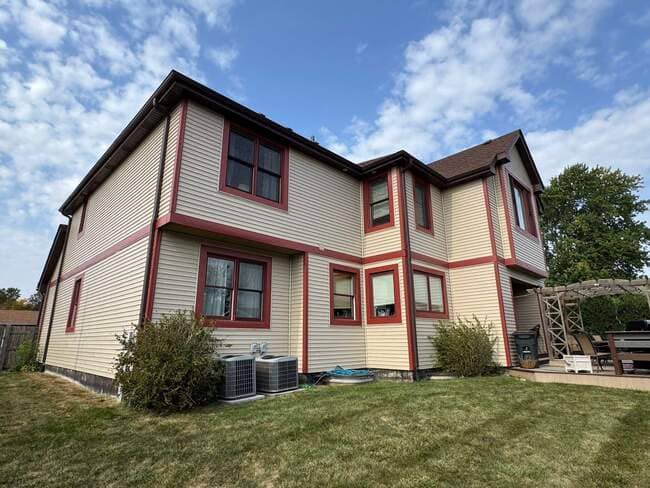
- Line
- Variform Contractors Choice
- Color
- Sandy Tan
- Town
- Lincolnshire
Why vinyl siding has to hang loose on the wall
A vinyl panel changes length with the temperature, and here a 10-degree morning can turn into a 40-degree afternoon all winter. Nailed tight, the panel has nowhere to go, so it buckles. The nail slot in the top edge exists to let it slide.
- 1The nail goes in the center of the slot and at least 1-1/4 inches into solid wood.
- 2Nails sit no more than 16 inches apart along the panel, unless the maker's sheet says otherwise.
- 3Panels overlap by 1 inch at each seam, and seams stay 2 feet apart from one course to the next.
- 4A 1/4 inch gap stays open inside every channel at corners, windows and doors, so the end has room to grow.
- 5About 1/32 inch stays open under the nail head, roughly the thickness of a dime. No nails go through the face.
You can test this yourself once the crew is done. Put your palm flat on a panel and push it sideways. A panel hung correctly slides a little in its slots and goes back.
Numbers from the Vinyl Siding Institute's quick tips for installing vinyl siding and the installation manual of its parent association. The panel maker's own instructions come first where they differ.
Is insulated vinyl siding worth the extra cost?
For most owners who can fit it in the budget, yes. Our siding page names insulated vinyl as one of the two best all-round choices for freeze-thaw winters here. The difference between the two panels sits behind the face.
Standard vinyl
A hollow PVC panel over house wrap, with color molded into it. It sits at the low end of the price range and never needs painting.
Thin builder-grade panels handle our winters worse than thicker ones, so ask about the thickness of the line on your estimate.
Insulated vinyl
The same kind of skin with shaped foam fixed behind it. Siding certified to ASTM D7793 has to reach at least R-2.0, according to the Polymeric Exterior Products Association.
Ask to see the certification label on the box. Standard panels carry their own, for ASTM D3679.
What does vinyl siding replacement cost in the Chicago suburbs?
$4 to $9
a square foot of wall, installed
$10,000 to $18,000
on an average two-story house, roughly 2,000 to 2,400 sq ft of wall
| Material | $1.50 to $4 a square foot. Thicker panels, insulated panels and Dutch lap sit at the top. |
|---|---|
| Labor | $2 to $5 a square foot. |
| Priced on top | Trim, soffit and any storm damage repair, written as their own lines. |
| Found once it's open | Soft sheathing is replaced before new panels cover it. |
Ranges from our vinyl against fiber cement guide, which runs the same sums for that material. Your price comes in writing after we measure the walls. Financing is available.
The wall we build, from the sheathing out
The old siding comes off and is hauled away first, because that's the only way to see what water has done behind it. Each band below is one layer, and the panels are the last thing to go on.
Sheathing
We push on it wherever a stain or soft spot shows. Damaged boards are replaced, so the nails have something solid to hold.
House wrap and flashing
New wrap laps down the wall and into the window and door flashing. Where a roof edge dies into a wall, a kick-out flashing sends the water into the gutter.
Starter strip
It's snapped level around the bottom of the house and nailed about every 10 inches, with 1/4 inch between lengths. A crooked start shows on every course above it.
Corners and channels
Corner posts and J-channel go around the openings, nailed 8 to 12 inches apart. Their job is to hide the panel ends and leave them room.
Panels, bottom to top
Each panel locks into the one below without being pulled tight, and the courses get checked with a level every five or six rows. The last course under the eave is held by utility trim.
A few panels, or the whole house?
Vinyl usually lasts 20 to 30 years here. Three cracked panels on a younger wall don't call for a re-side, and our siding repair page shows how one panel comes out. These are the signs we weigh on the inspection.
- Cracks or dents on one wall, and the color can still be boughtRepair those panels.
- Hail marks on the storm side, with old panels turning brittlePrice that wall, then price the house, and compare the two.
- Waves or loose panels on several wallsUsually tight nailing from the first install. Re-side those walls.
- Faded, chalky panels all around the houseThe finish has worn out, so replacement makes sense when you want it to look new again.
- Soft spots, or peeling paint inside on an outside wallWater is getting behind the panels, so the sheathing gets checked along with the siding.
When another siding suits the house better
We install engineered wood and fiber cement too, so you can see the options side by side on one quote. LP SmartSide engineered wood siding brings a real wood grain, and fiber cement suits an open lot that takes the worst of the wind.
If your shingles are also near the end, doing roof and siding in one project means the wall joints are flashed once, and the roof goes first.
What Illinois law lets a roofer do after hail
Illinois does not allow a roofing contractor to negotiate an insurance claim. We photograph every wall, measure them and write a code-compliant estimate. Our partner, the licensed Illinois public adjuster State Adjusting Services, can represent you, and the insurer decides what it pays.
Our siding storm damage guide covers which marks count as damage and which ones are cosmetic.
Questions about replacing vinyl siding
How long does vinyl siding replacement take?
A typical single-family house takes about three to five working days, depending on its size and on any sheathing or trim repairs found under the old panels. We confirm the timeline after the free inspection.
Is insulated vinyl siding worth the extra cost?
For most owners who can fit it in the budget, yes. Foam sits behind the panel, and siding certified to ASTM D7793 has to reach at least R-2.0. Ask for both versions on your estimate so you can compare them on your own walls.
Can you match my old vinyl siding color?
Often only on a whole wall or a whole house, because colors get discontinued and old panels fade. For a small repair we look for the same product first, since a new panel blends in only if it can still be bought.
Does vinyl siding crack in the cold?
It can, since vinyl gets more brittle as temperatures drop, and a knock that it would shrug off in July can crack it in January. Thicker panels hung loose in their slots handle our winters much better.
Want this looked at?
We inspect for free, document what we find and prepare a code-compliant estimate you can hand to your insurer. Our partner, a licensed public adjuster, State Adjusting Services, can represent you on the claim.
Call (866) 992-2982. Free Inspection