
Roof and siding replaced in one project, decided wall by wall
State Restoration Services replaces roofs and siding with its own crews across the north and northwest Chicago suburbs, from our base in Lincolnshire. When both are worn out or both took the same storm, we price them as one project with one crew, so the places where the roof meets the walls are opened, flashed and closed once.
When only one of them needs to go, we say so and price that one. The free inspection covers the roof replacement side and the siding side on the same visit, wall by wall and slope by slope.
Roof, siding, gutters and windows from the same team, with one point of contact from estimate to cleanup.
Three to five working daysWhat re-siding a typical single-family house takes once the roof is done.
Two ways to pay over time0% in-house for up to 24 months, or lender plans of 10 to 30 years.
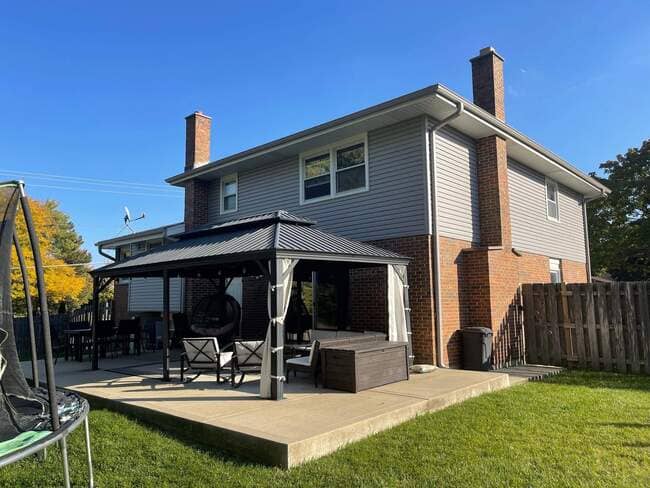
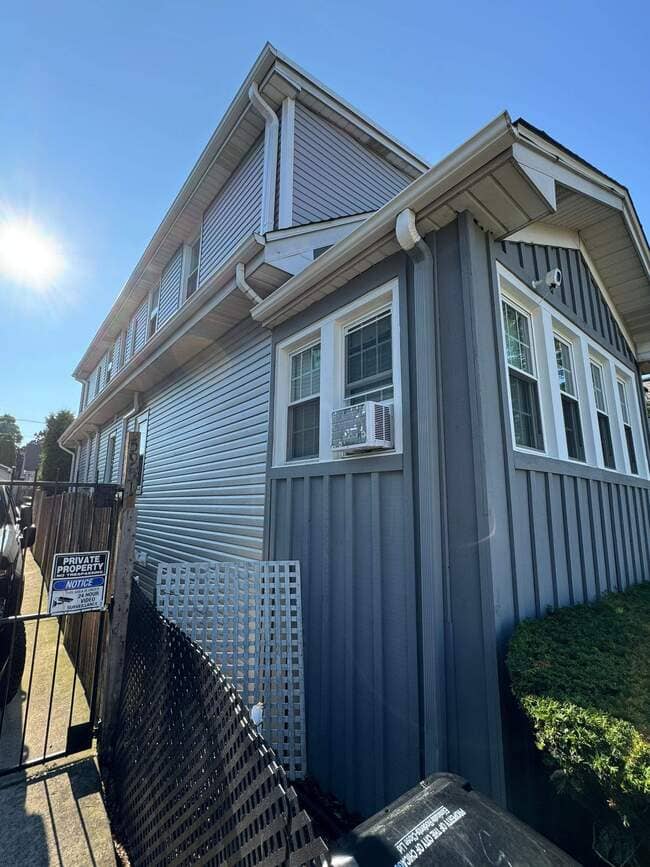
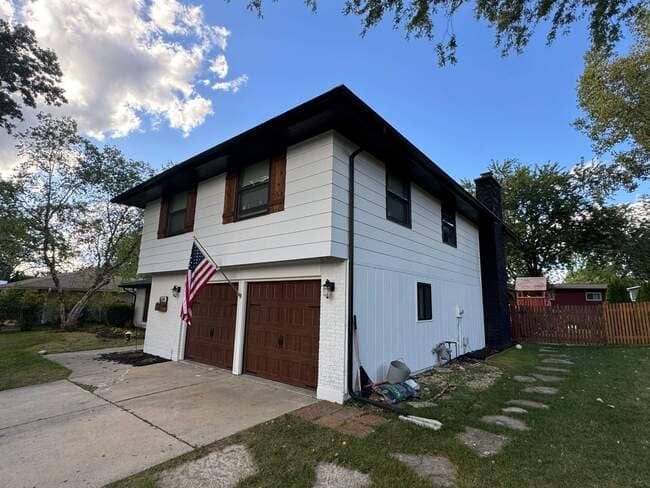
Both now, one now, or neither: the call for each combination
Age alone does not decide it. What decides it is the condition of each one, and whether a storm hit it. Find your roof across the top and your siding down the side.
When the siding damage is only a few panels on one wall, a repair is usually the better buy than a new wall. Our siding repair page shows how one panel comes out without opening the rest.
Five places the roof and the walls share
A roof crew and a siding crew both have to work at these joints. Done in one project, each is opened once. Done years apart, the second job has to take apart and rebuild what the first one finished.
| Joint | Done once, with both open | When only one job is done |
|---|---|---|
| Roof-to-wall joint (garage, porch, bump-out) | New step flashing goes in with every shingle course, the house wrap laps down over it, and the new siding stops 1 to 1.5 inches above the shingles. | A new roof means taking down and rehanging the old siding along that joint. Old vinyl gets brittle in cold weather and can crack when it is unhooked. |
| Bottom end of that joint | A kickout flashing goes in as the first piece of step flashing, under the wrap, so the water lands in the gutter. Our kickout flashing guide explains why the code has required it since 2009. | A house that never had one has to be opened at that corner later, shingles and siding both. |
| Eaves: drip edge, gutter and fascia | The drip edge and ice-and-water membrane go on, the fascia behind the gutter is checked, and the gutters come down and go up one time. | Gutters can be taken down twice, once for each job. Our guide on gutters with a new roof covers the three ways it can go. |
| Dormer side walls | The small walls standing on the roof are re-sided and re-flashed with the roof around them. | Siding on a dormer is worked from the roof, so a later siding job walks on new shingles. |
| Chimneys in a sided chase | The chase siding, its flashing to the roof and the cricket behind it are done as one piece of work. | The flashing is tied into one material that stays old. |
What the two jobs cost, from the ranges we publish
These are planning ranges from our own pages for an average two-story house in our area, not a quote. We measure the roof and every wall before we price anything.
Sources on this site: roof prices from our 2026 roof replacement cost guide; siding at $4 to $9 a square foot in vinyl and $8 to $14 in fiber cement, from the siding repair page.
Work that is not paid for twice
- Taking the siding off and putting it back along each roof-to-wall joint.
- Gutters down and back up, or replaced once.
- Opening the corner to add a kickout where there is none.
- A second crew visit, setup and cleanup.
The project can be split across both financing options: the in-house plan has no interest for up to 24 months.
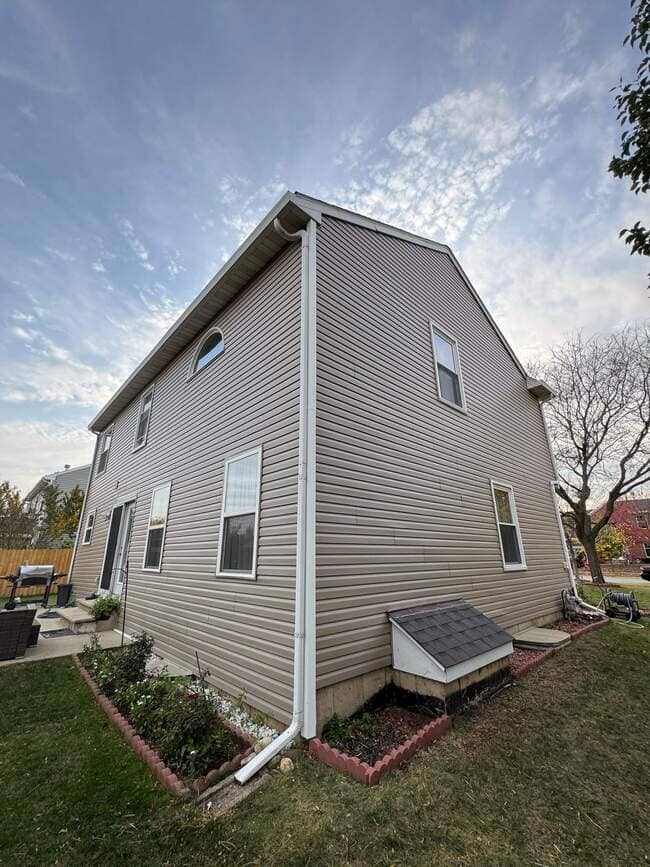
Roof first, then the walls from the top down
The roof goes first because tear-off sends old shingles and nails down the walls, and new siding underneath would take the scratches. Once the roof edge is finished, the drip edge is on and the wall flashing is in, the siding crew starts at the top of each wall and works down, so every course laps over the one below and over the flashing.
Gutters go up last, under the new drip edge. Windows that need replacing are done while their wall is open, which our storm-damaged window page explains for hail.
After a storm, the roof and the walls go on one estimate
Hail and wind rarely pick only the roof. On the free inspection we photograph and measure the roof and every wall, and write one code-compliant estimate with the roof and siding damage itemized side by side. When the shingles are past repair, our hail damage roof replacement page shows how the slopes are decided.
Illinois law does not let a roofing contractor negotiate a claim. Our partner, the licensed Illinois public adjuster State Adjusting Services, can represent you with the insurer, and the storm and insurance page covers how that works. Your insurer decides what it pays.
Ask us on the inspection which walls the storm reached and which only show age. The estimate keeps them on separate lines, so you see what is storm damage and what would be your own choice.
Questions about doing the roof and siding together
Should I replace my roof and siding at the same time?
Do both at once when both are worn out or both were damaged by the same storm. If only one of them is failing, replace that one and keep the other. The joints where the roof meets a wall get new flashing either way.
Which goes first, the roof or the siding?
The roof. Tear-off drops old shingles and nails down the walls, and the wall flashing has to be in before the siding covers it. The siding crew then works each wall from the top down, and the gutters go up last.
How long does a roof and siding project take?
Re-siding a typical single-family house takes three to five working days after the roof is on. The roof itself depends on its size and pitch, and we give you the schedule for both in writing after the inspection.
Can the roof go on an insurance claim and the siding be paid by me?
Yes. When a storm hit the roof but the siding is only old, the estimate lists the storm damage and your own siding work on separate lines of one contract. Your insurer decides what it pays for the storm part.
Send photos of both through the contact page or call (866) 992-2982. The office is open Monday to Friday, 7:00 AM to 7:00 PM, and Saturday and Sunday, 9:00 AM to 5:00 PM.
Want this looked at?
We inspect for free, document what we find and prepare a code-compliant estimate you can hand to your insurer. Our partner, a licensed public adjuster, State Adjusting Services, can represent you on the claim.
Call (866) 992-2982. Free Inspection