
 Volodymyr Lukaniuk
Quick answer: Hail dents and wind damage on siding are a legitimate claim when they're functional, not cosmetic — cracked or split panels, chalky impact marks concentrated on the storm-facing wall, or panels torn loose by wind. Faded, chalky-all-over siding or scattered dings from years of mowing and hoses is just age, not a claim.
Siding storm damage isn't always obvious the way a missing shingle is. A hailstorm can leave a wall of vinyl looking almost untouched from the sidewalk while it's actually cracked underneath, or it can leave dents that are honestly just cosmetic and don't need a claim at all. We get this question constantly in the weeks after a Chicago-area hailstorm: is this actually a siding claim, or did I only notice normal wear because I was outside checking my roof? Here's how we tell the difference, what an adjuster is really looking for, and how a siding claim plays out once you file one.
What does real storm damage on siding actually look like?
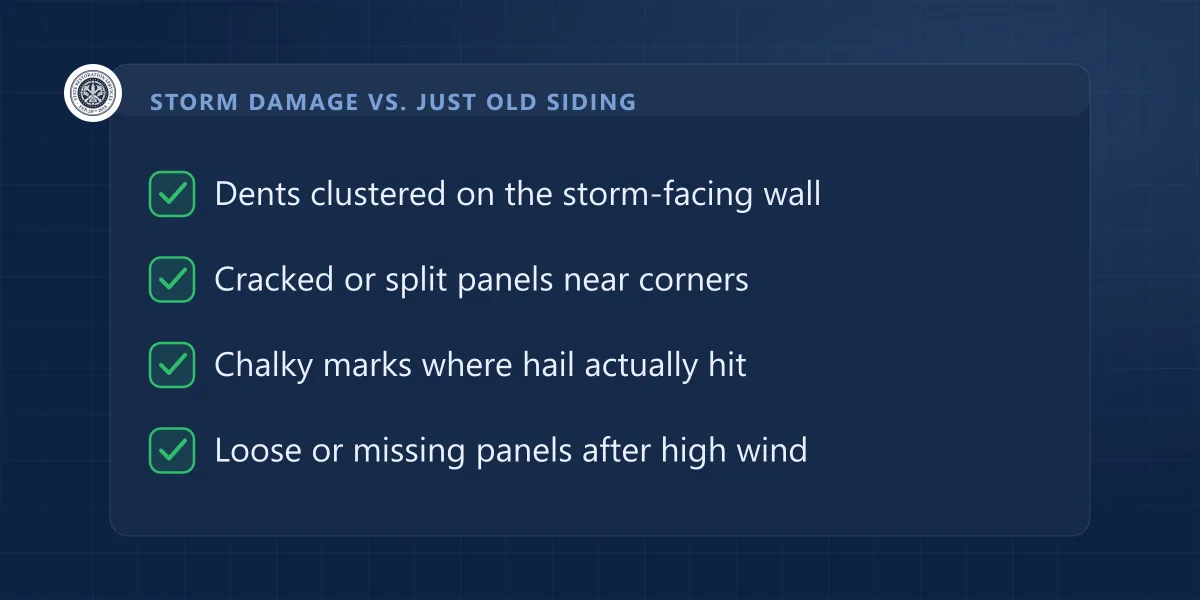
Real storm damage is functional, not just visible: cracked or split panels (especially near corners and seams), chalky white impact marks concentrated on one side of the house, and panels that are loose, warped, or missing after high wind. Scattered surface dings spread evenly across every wall are usually just age, not a storm.
Vinyl siding dents the way a soda can dents — a hard hit leaves a shallow depression that doesn't spring back, and it's sometimes hard to see unless the light hits it at a low angle in the evening. Look for a cluster pattern on the wall that faced the storm, since hail almost never hits a house evenly on all four sides the way people assume. Wind damage looks different: creased or bowed panels, siding pulled loose at the bottom lock, or whole sections missing near a corner where wind gets under an edge first and peels back from there. Fiber cement siding cracks and chips instead of denting, and aluminum siding dents in a way you can actually feel with your hand, not just see from the yard.
How is siding hail damage different from normal wear and tear?
Normal wear shows up evenly everywhere and gets more visible gradually over years — chalking, fading, small dings near the ground from mowers and garden hoses. Storm damage shows up suddenly, concentrated on the wall that faced the wind or hail, and it's functional: it lets water get behind the panel, not just marks the surface.
| Sign | Normal wear | Storm damage |
|---|---|---|
| Location on the house | Even, all sides, worse low down | Concentrated on one storm-facing wall |
| Timing | Gradual, over years | Appears right after one storm date |
| Panel integrity | Surface only — color and gloss loss | Cracked, split, or dented through |
| Fasteners & seams | Tight, no gaps | Loose, popped, or pulled from the J-channel |
We check both at the same time on every inspection, because a house that's had thirty years of Chicago weather usually has some of each — the honest answer is often "this section is a claim, that section is just old," not an all-or-nothing verdict.
Does wind damage count as a siding claim the same way hail does?
Yes — wind damage is claimable the same way hail is, as long as it's tied to a specific storm date and it's functional, like torn-loose panels, exposed sheathing, or a whole section blown off, rather than siding that was already loose from age. Insurers usually want the storm date, which is easy to pull from local weather records for Lake and Cook County.
What trips people up is wind creep. A panel that was already a little loose from years of freeze-thaw gets finished off by a windstorm, and it's genuinely hard for anyone, including us, to say with certainty how much of that was the storm versus years of the fasteners slowly working loose. We document exactly what we see, note the storm date, and let the adjuster make that call rather than guessing for you on the spot — that honesty is a big part of why we don't try to talk anyone into a claim before we've actually inspected the damage.
What does a siding insurance claim actually cover?
A covered siding claim typically pays to replace the damaged panels, sometimes just the storm-facing wall and sometimes the whole house, under either replacement cost value (RCV) or actual cash value (ACV) depending on your policy — with the depreciation held back under RCV until the work is done and documented.
The part homeowners run into most is matching. Vinyl and fiber cement colors get discontinued fairly often, and if your existing siding is even a few years old, the exact shade may not be available anymore. Some policies address this directly and some leave it to negotiation, so it's worth asking your adjuster specifically whether a reasonable-match provision applies before you assume the insurer will only pay for the one damaged wall. This is exactly the kind of detail a licensed public adjuster is useful for. Illinois law doesn't let us negotiate the claim on your behalf — we document the damage and hand you an honest, code-compliant estimate, and our affiliate, State Adjusting Services, can advocate on the claim itself if it needs pushing.
How do you document siding storm damage before calling your insurer?
Take dated photos of every wall, not just the damaged one, note the exact storm date, and get a professional inspection before you file. A documented claim with photos and a written estimate moves faster and draws fewer pushback questions than a phone call with no backup.
- Photograph every side of the house, not just the damaged wall — the contrast helps prove which wall actually took the hit.
- Note the exact storm date. Your insurer will ask for it, and it's easy to pull from local weather records if you don't remember.
- Check for related damage. Gutters, downspouts, window screens, and AC fins often show hail dings even when siding damage is subtle, and it strengthens the claim.
- Get a written inspection report before you file, not after — it gives the adjuster something concrete to work from instead of your word alone.
- Compare at least one other quote before signing anything, especially if someone's pushing a same-day signature.
Frequently asked questions
Will my insurance company automatically replace all my siding after hail damage?
Not automatically. Most policies only cover the walls that actually show functional damage, unless your policy has a matching provision or your adjuster agrees a partial repair won't look right. Ask specifically about reasonable-match coverage before assuming it's included.
How long after a storm can I still file a siding claim?
Check your policy, but most Illinois insurers give you one to two years to file a storm claim. Sooner is better, since damage gets harder to tie to a specific storm date the longer you wait, and some damage lets water in gradually in the meantime.
Can I just repair a few damaged panels instead of filing a full claim?
Yes. For minor, isolated damage, a spot repair often makes more sense than a claim, especially if your deductible is close to the repair cost. We'll tell you honestly when a claim isn't worth filing — it protects your future premiums as much as it protects your wallet.
Does State Restoration Services handle the insurance negotiation for me?
No. Illinois law doesn't allow a contractor to negotiate your insurance claim. We document the damage and build an honest estimate; if the claim needs an advocate, our affiliate State Adjusting Services, a licensed public adjuster, can represent you on the negotiation itself.
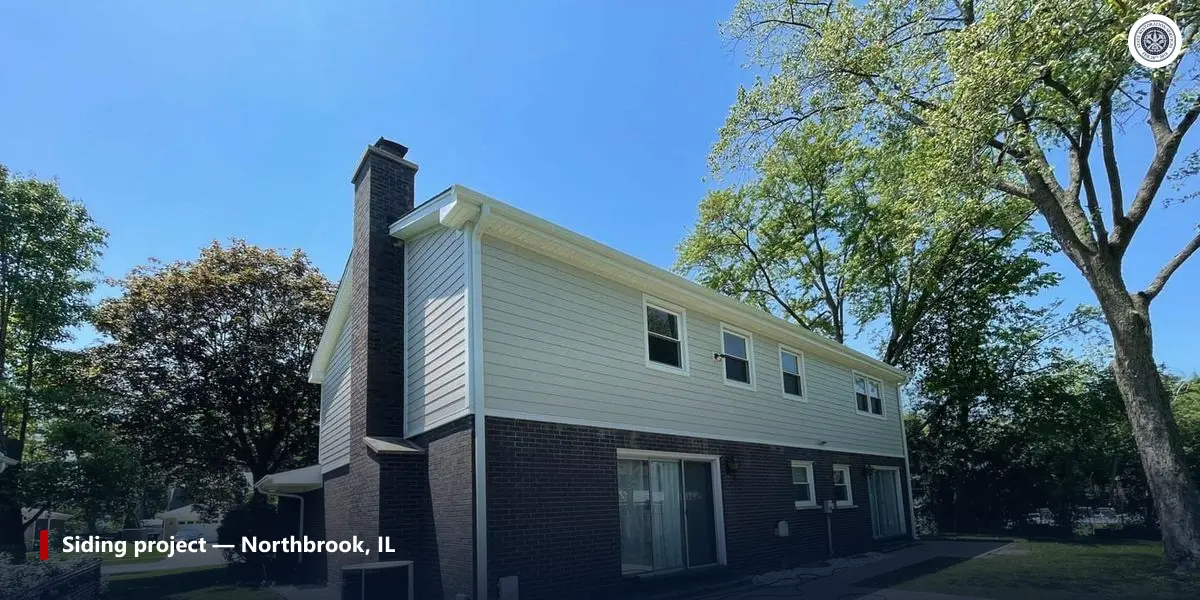
Not sure if your siding damage is worth a claim? Schedule a free inspection and we'll give you a straight answer before you call your insurer, no pressure either way. We install and repair siding across the north and northwest Chicago suburbs, including Northbrook and Buffalo Grove, and our insurance claim and process pages walk through exactly how we work a claim from inspection to final payment. Related reading: what real hail damage looks like and filing a storm-damage claim in Illinois.