
 Volodymyr Lukaniuk
Quick answer: Double-pane windows with low-E glass and argon fill are the practical standard for the Chicago suburbs — they cut drafts and heat loss dramatically over single-pane, at a sensible price. Triple-pane adds real comfort and noise reduction on exposed, north-facing, or busy-street walls, but the straight energy-only payback versus double-pane runs 15 to 25+ years here, so pick it for comfort, not for the math.
If you're weighing double-pane vs triple-pane windows for a Chicago-area home, the honest answer is that both are legitimate choices — they just make sense on different walls of the same house. We install both, so this guide breaks down the real U-factor numbers, what each option actually costs installed in the Chicago suburbs, and the part most online window calculators skip: how long triple-pane really takes to pay for itself in our freeze-thaw climate.
What's actually different between double-pane and triple-pane glass?
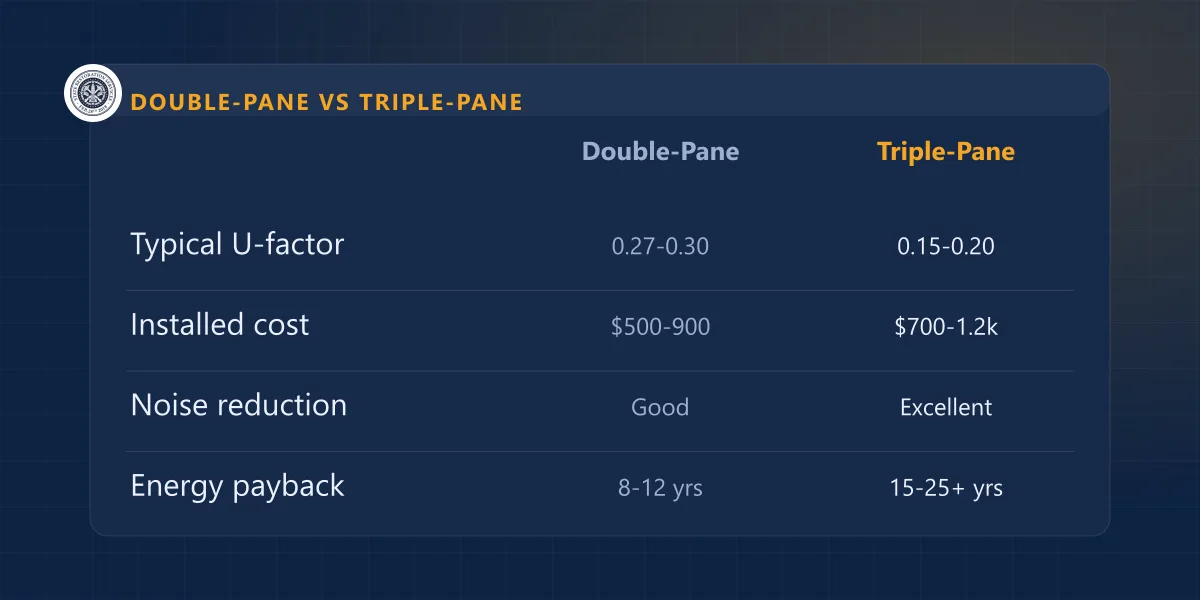
Double-pane means two sheets of glass with a sealed, gas-filled gap between them; triple-pane adds a third sheet and a second gap. More panes and gas layers slow heat moving through the glass, measured as U-factor — the lower the number, the better the insulation. A modern double-pane low-E window typically runs a U-factor around 0.27–0.30; triple-pane drops to roughly 0.15–0.20.
Two things do most of the work inside that glass package: the low-E coating, a microscopically thin metallic layer that reflects heat back where it came from (indoors in winter, outdoors in summer) without blocking visible light, and the gas fill — argon or, less commonly, denser krypton — which conducts heat more slowly than plain air. Frame material matters too: vinyl and fiberglass insulate far better than aluminum, which is why you rarely see bare aluminum frames on a Chicago-area retrofit anymore. For reference, ENERGY STAR's criteria for our Northern climate zone call for a U-factor of 0.27 or lower — solidly double-pane territory, not a triple-pane requirement.
| Glass package | Typical U-factor | Sound reduction | Relative cost | Best for |
|---|---|---|---|---|
| Single-pane | 0.80–1.00+ | Poor | $ | Nothing built in this climate since the 1980s — replace it |
| Double-pane (low-E, argon) | 0.27–0.30 | Good | $$ | The practical standard for most Chicago-suburb homes |
| Triple-pane | 0.15–0.20 | Excellent | $$$ | Exposed, north-facing, or busy-street walls |
What does it actually cost to replace windows in the Chicago suburbs?
Expect roughly $500–$900 installed per standard double-pane vinyl window in the Chicago suburbs, and $700–$1,200+ for triple-pane, with bay, picture, and oversized windows running well above that. A typical 15–20 window whole-house project lands around $9,000–$18,000 for double-pane or $13,000–$24,000 for triple-pane, before any trim or siding repair around the openings.
What actually moves that number: window size and style (a fixed picture window is cheaper per square foot than an operable casement with hardware), grid patterns, whether the old frame gets fully removed and re-flashed versus a pocket insert over the existing frame, disposal of the old units, and how much exterior trim or siding has to be capped or replaced around each opening. None of that is optional if you want the window to actually seal — a beautiful new window over rotten, unflashed trim just moves the leak somewhere else. We also offer financing for larger whole-house projects, since most homeowners do windows in phases rather than all at once.
| Window type | Double-pane | Triple-pane |
|---|---|---|
| Standard double-hung (vinyl) | $500–$750 | $700–$950 |
| Casement | $600–$850 | $800–$1,100 |
| Large picture or bay window | $1,200–$2,500+ | $1,600–$3,200+ |
| Whole-house (15–20 windows) | $9,000–$18,000 | $13,000–$24,000 |
Why triple-pane matters more for comfort than for your energy bill here
The straight energy-only payback for triple-pane over double-pane in Chicago runs 15 to 25+ years, because Illinois natural gas is relatively cheap and double-pane low-E glass already blocks most of the heat loss on its own. What triple-pane buys you immediately, on day one, is a warmer interior glass surface — noticeably less of that cold-radiating-off-the-window feeling on a January night — plus real noise reduction.
That warmer interior surface isn't just comfort talk. A colder pane of glass is exactly what lets condensation and frost form on the inside of a window in a Chicago winter — a separate issue from the attic-driven ice dams we've written about, but the same root cause: heat escaping where it shouldn't. Triple-pane's warmer glass surface cuts that risk noticeably, which matters most on north-facing rooms, bedrooms with humidifiers running, or any wall that catches a constant winter wind. Sound reduction is the other real win: if you're near a Metra line, a busy arterial like Rand Road or Milwaukee Avenue, or just live close to your neighbors, triple-pane noticeably quiets a room in a way double-pane doesn't.
| Consideration | Double-pane | Triple-pane |
|---|---|---|
| Draft near the glass on a windy January night | Much less than single-pane | Minimal |
| Interior condensation/frost risk | Low | Very low |
| Street or rail noise reduction | Moderate | Strong |
| Straight energy-bill payback | 8–12 yrs vs. single-pane | 15–25+ yrs vs. double-pane |
How do you know it's actually time to replace your windows?
Replace windows when you feel drafts, see fog trapped between the panes, or fight the sashes to open or close them. Fogging between the glass means the insulating seal has failed and that window has stopped doing its job no matter how new it looks from the driveway — regluing or recaulking the outside won't fix a failed internal seal.
- Drafts you can feel with your hand near the frame or sash, not just a general chill in the room.
- Fog or condensation trapped between the panes — the sealed gas gap has failed; this is not something a caulk gun fixes.
- Sticking, painted-shut, or won't-stay-open sashes — usually a warped or swollen frame.
- Soft spots, rot, or peeling paint on the frame or sill — moisture has gotten into the wood.
- Heating and cooling bills that keep climbing with no other explanation.
Does homeowners insurance ever cover window replacement?
Sometimes. Hail and wind can crack glass, dent screens, or damage a frame badly enough to be a legitimate claim, but a failed seal from normal age is wear and tear, not storm damage, and won't be covered. Illinois law does not allow a roofing contractor to negotiate your insurance claim directly — we document the damage and build a code-compliant scope, and our affiliated, licensed public adjuster, State Adjusting Services, can represent you if the claim needs to be pushed further.
Frequently asked questions
Is triple-pane worth the extra cost in the Chicago suburbs?
For most rooms, double-pane low-E glass is enough. Triple-pane's biggest wins are on exposed, north-facing, or noisy-street walls, where the extra comfort and quiet are worth the 15–25 year energy payback — you're paying for comfort, not for the utility bill savings alone.
How do I know my windows have actually failed?
The clearest sign is fog or condensation trapped between the panes — that means the sealed gas gap has failed and the window is no longer insulating. Drafts near the frame, sashes that stick or won't stay open, and rising energy bills are the other reliable signs.
Can new windows really lower my energy bills?
Yes. Replacing old single-pane or seal-failed windows with ENERGY STAR-rated double or triple-pane units cuts the drafts and heat transfer that drive up heating and cooling costs, and makes rooms noticeably more comfortable year-round, not just cheaper to run.
Can windows be added to a roofing or storm-restoration project?
Often, yes. If you're already having a roof or storm-damage project done, adding windows means one crew, one schedule, and trim and flashing integrated correctly around every opening instead of two separate contractors working around each other.
Weighing double-pane vs triple-pane for your own home? Book a free inspection or call (866) 992-2982 — we serve the north and northwest Chicago suburbs and will give you a straight recommendation per room, not a one-size-fits-all upsell.